
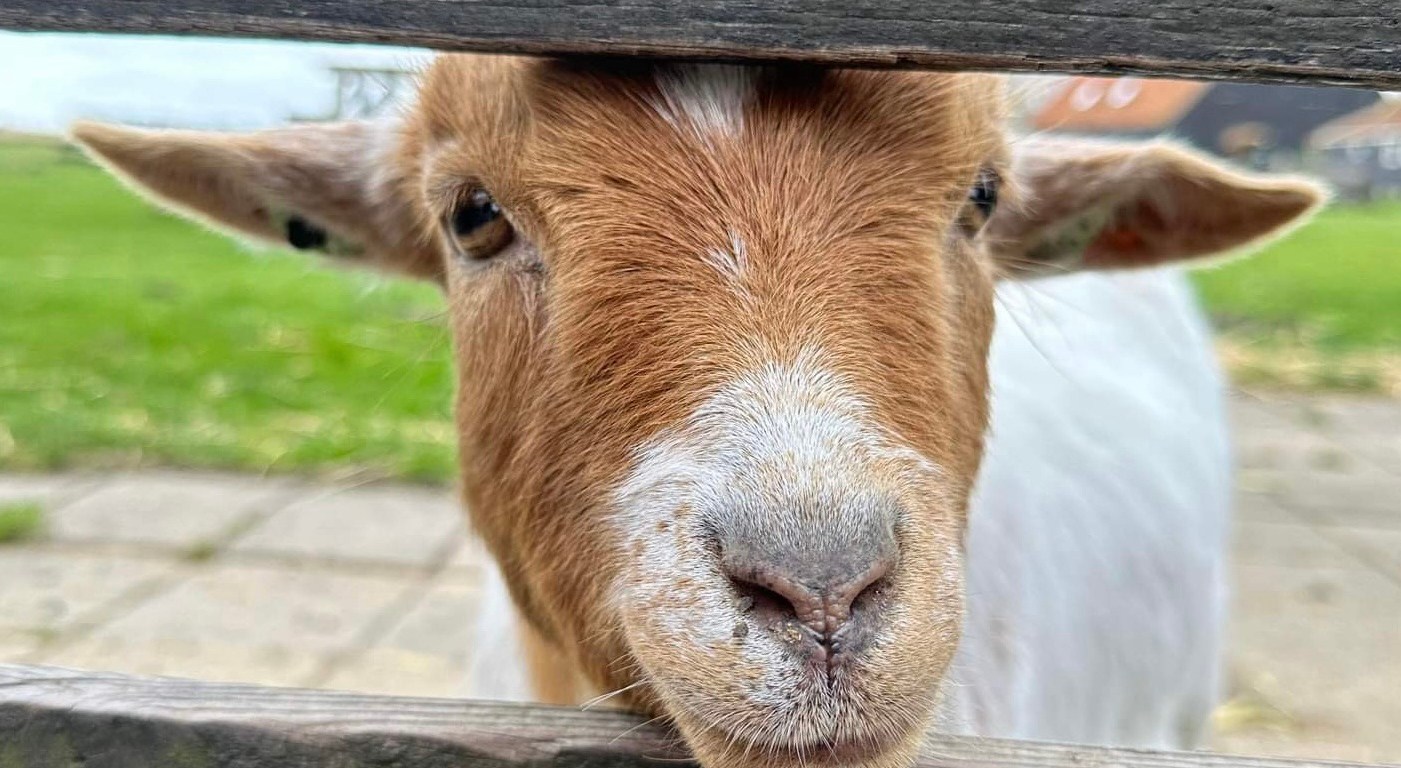
Today we took our allotted numbers and headed out to our allocated bus – the yellow one, so that Cynthia, our Dutch host could take us on a trip out to Zaandam where we were to view a village with operating windmills.
The city of Zaandam historically served as a large milling centre with thousands of windmill powered saws processing Scandinavian wood for the shipbuilding and paper industries along with windmills grinding pigment and linseed oil for paint.
Each day we have a selection of on shore activities to choose from which are all included in the price.
Lucky!
We are still in Amsterdam and haven’t left the dock yet but when we get back to the boat it would have moved to Etrecht – about 43km’s south.
Cynthia was a great host and gave us lots of little snippets of the area.
For instance, apparently the canals are three foot of peat and two foot of bicycles. Cynthia isn’t the first person to tell us that.
Who knew Cornelius Cornus invented the purpose of a crank shaft in a windmill in 17 century.
There were about 10,000 windmills, mainly in the south but now only about 2,000 still exist.
She pointed out this cool apartment building, apparently the man who built it lived in the middle so he could keep an eye on the neighbours.
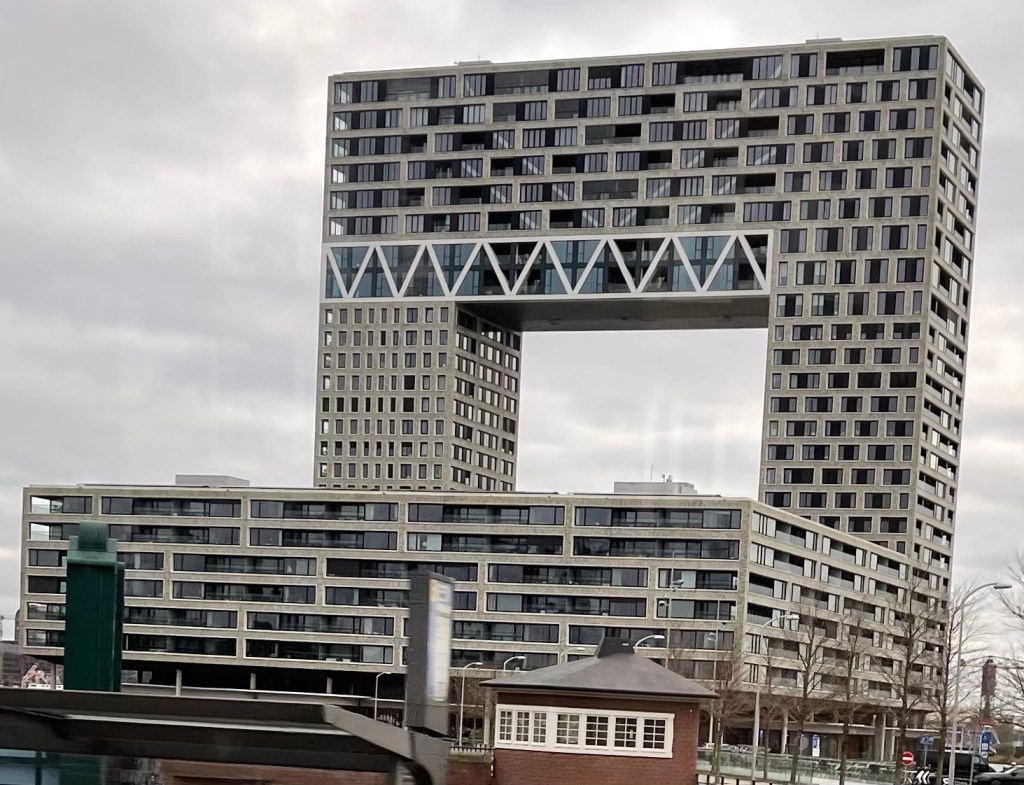
Bit voyeuristic I would have thought.
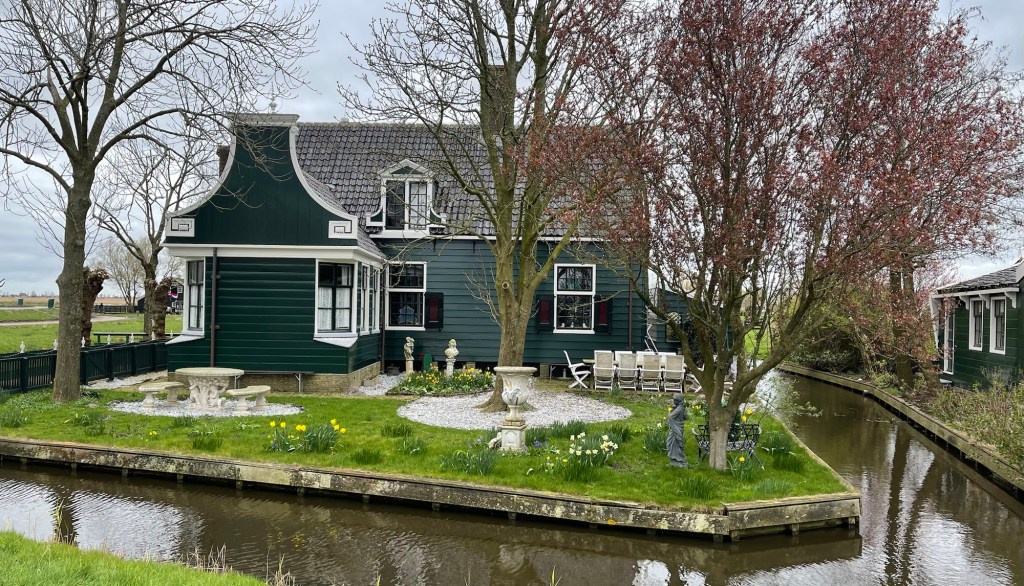
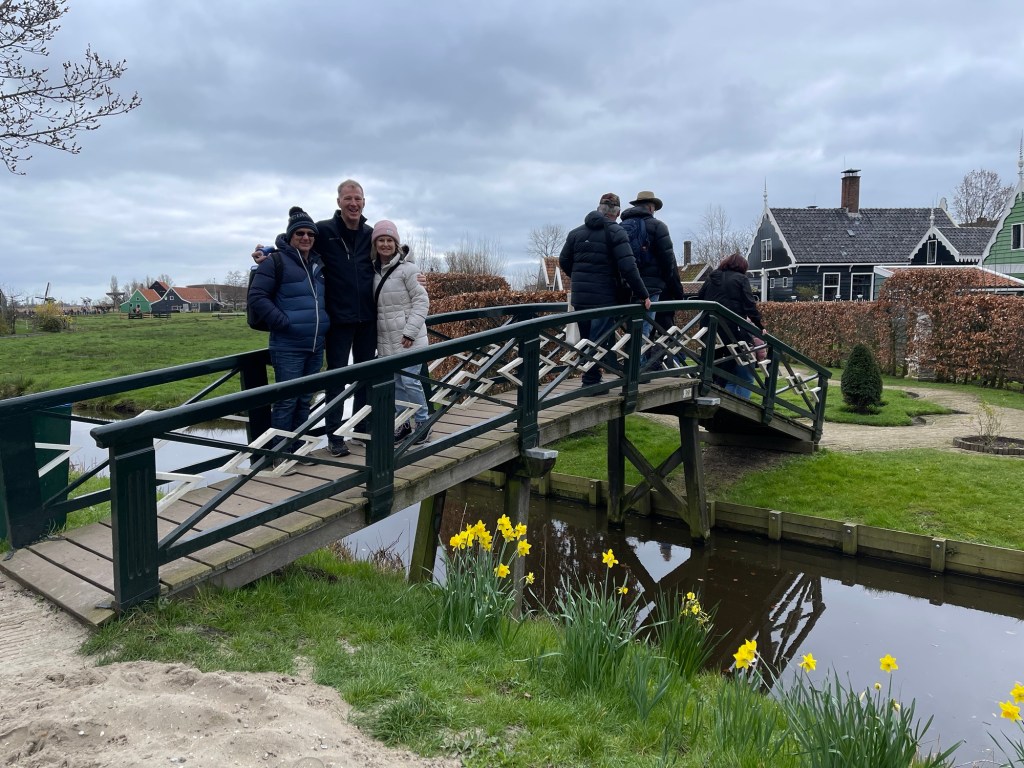
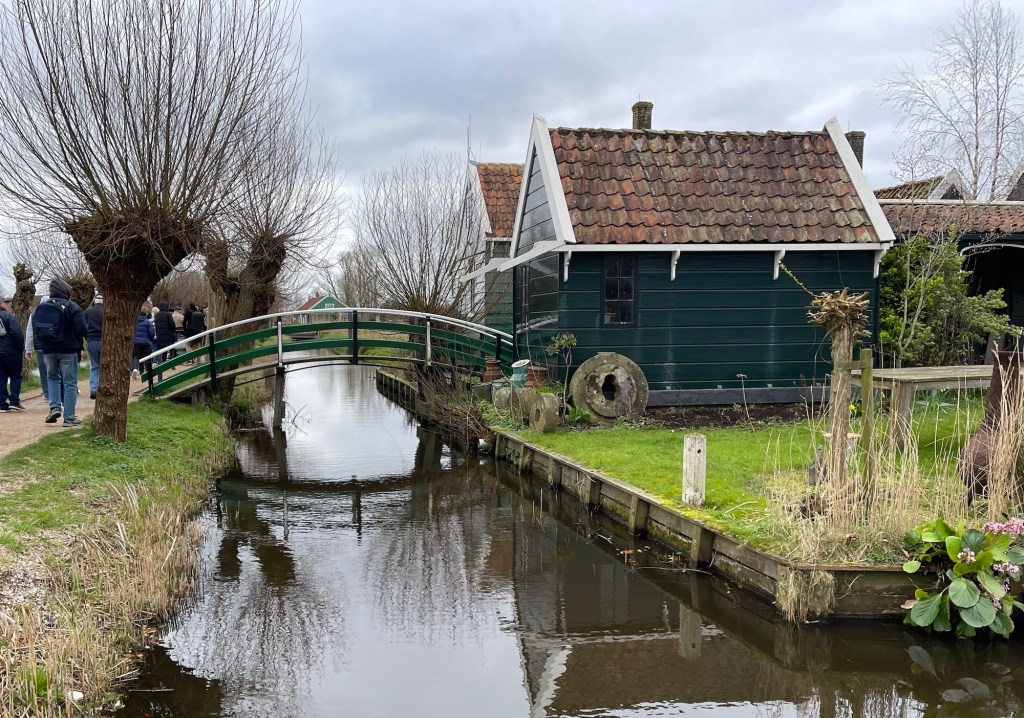
The village was really quaint, hopefully somewhat captured in these photos.
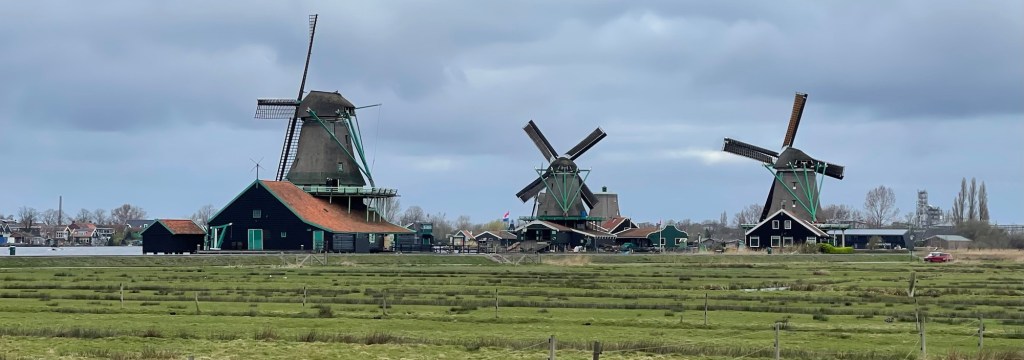
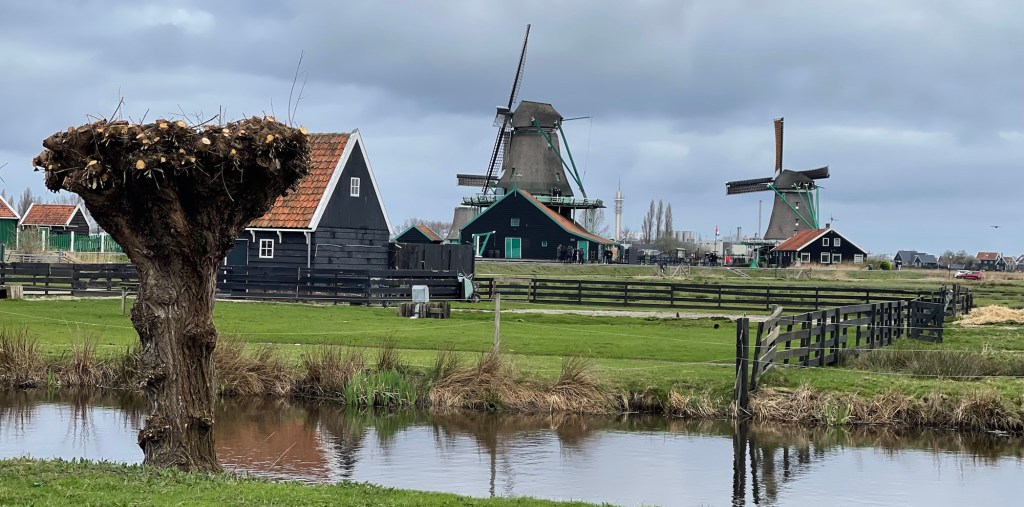
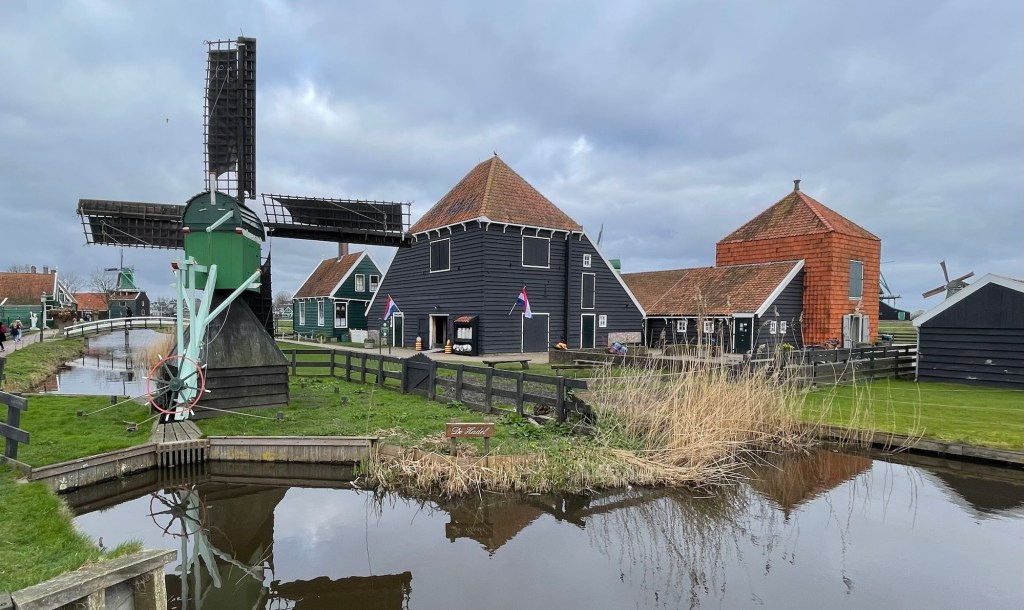
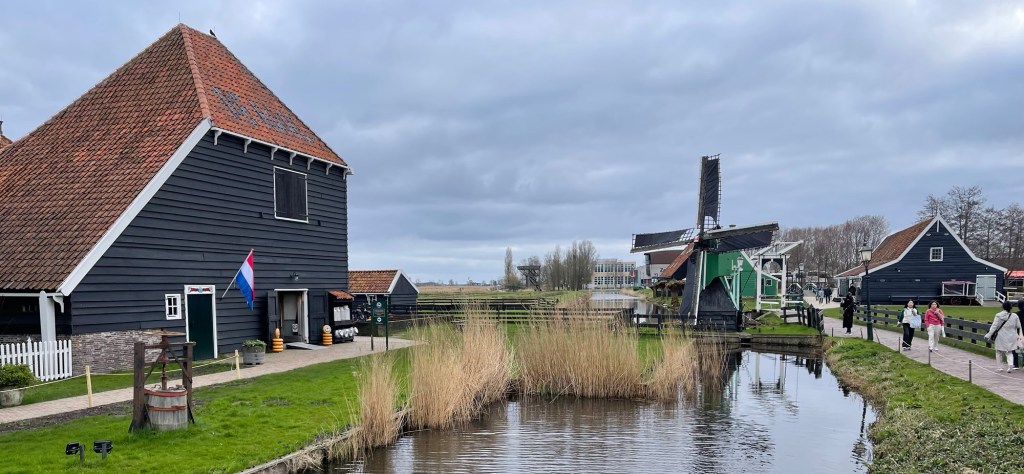
Our first stop was the cheese factory where to our delight, it a) did not stink, b) we got a little talk on how cheese is made and c) we got some samples.

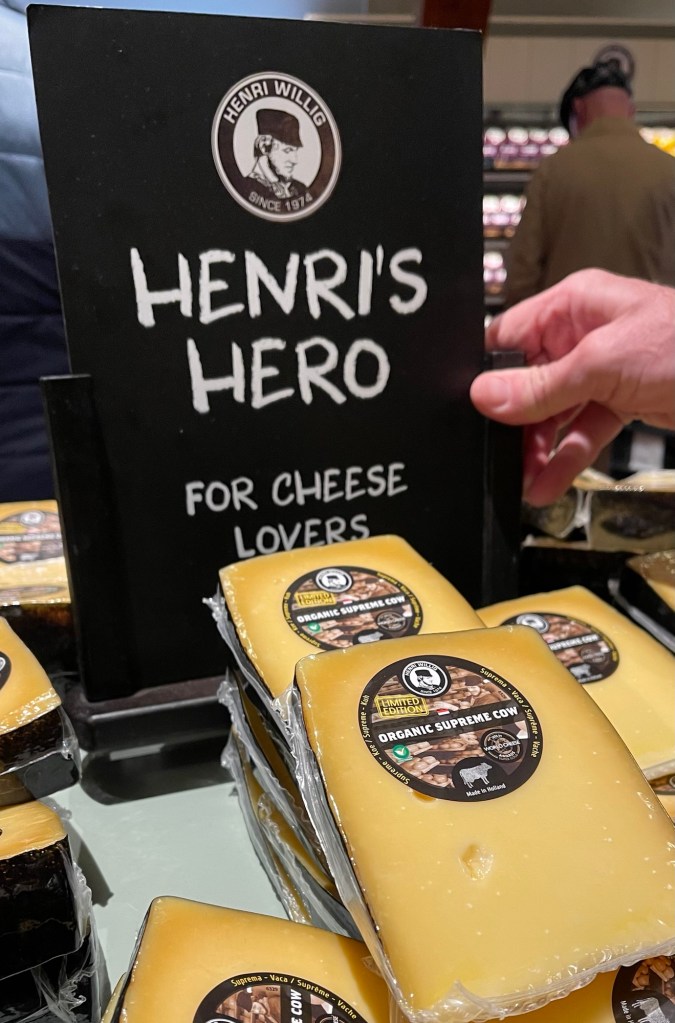
Did you know that 10 litres milk makes 1kg cheese and the name of the cheese is representative of its shape? And cheese needs to be turned regularly to retain its shape (that little snippet from Gary later on).
Who knew?
The Henri Willig cheese factory produces 15,000 baby cheeses per day. Cheese 4-7 months old is ‘baby’ cheese, 7-12 months old is ‘old’ cheese and anything over that is very mature or ‘very old’ or maybe just ‘aged’.
Whatever, the cheese samples were delicious. I was particularly drawn to one and may have eaten most of the samples on the plate. Although I can’t remember what type it was!
We then stopped by the oldest working paint mill in the world that grinds pigments and dye stuffs – Verfmolen “De Kat” – circa 1782. We were able to ascend to the top for a photo opportunity or two. Or just to look around.
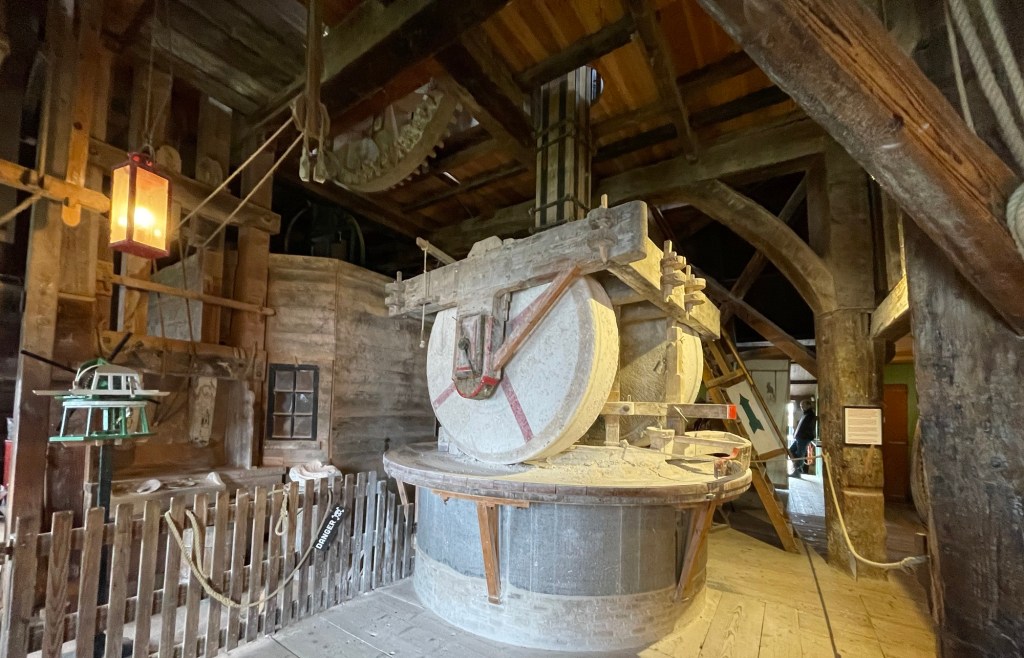
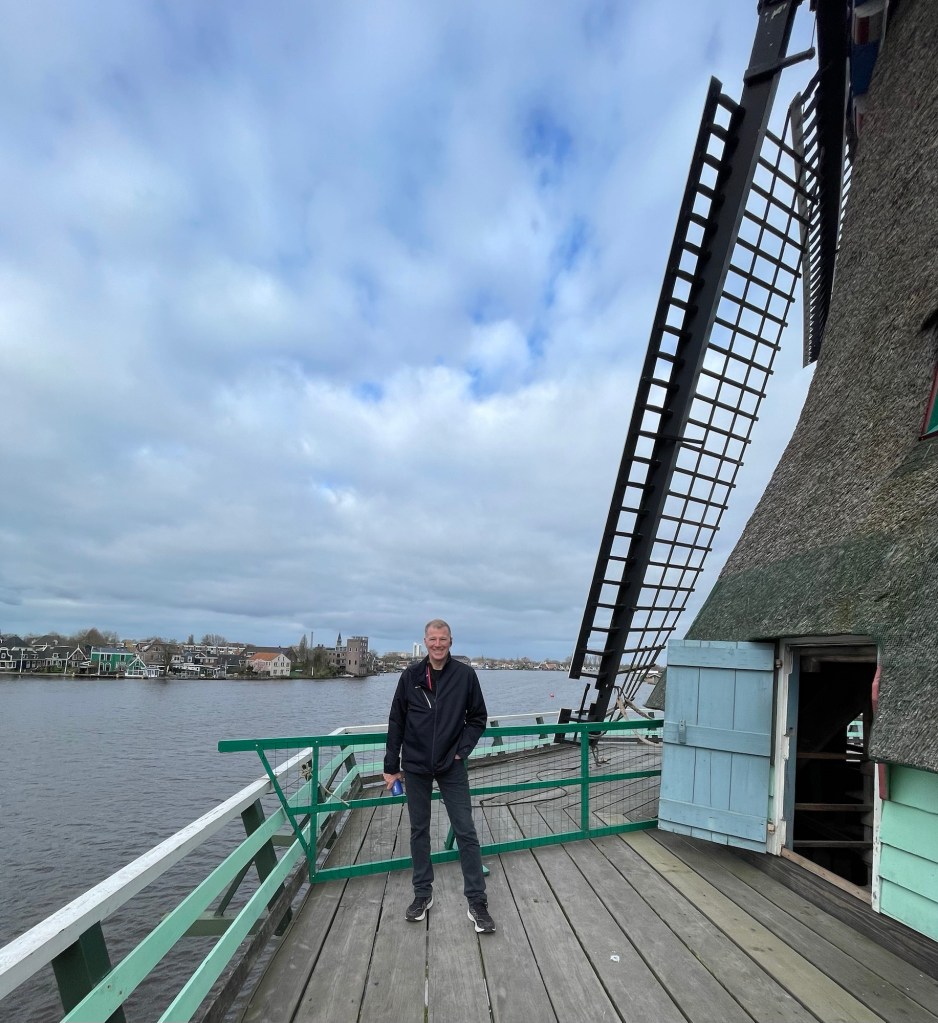
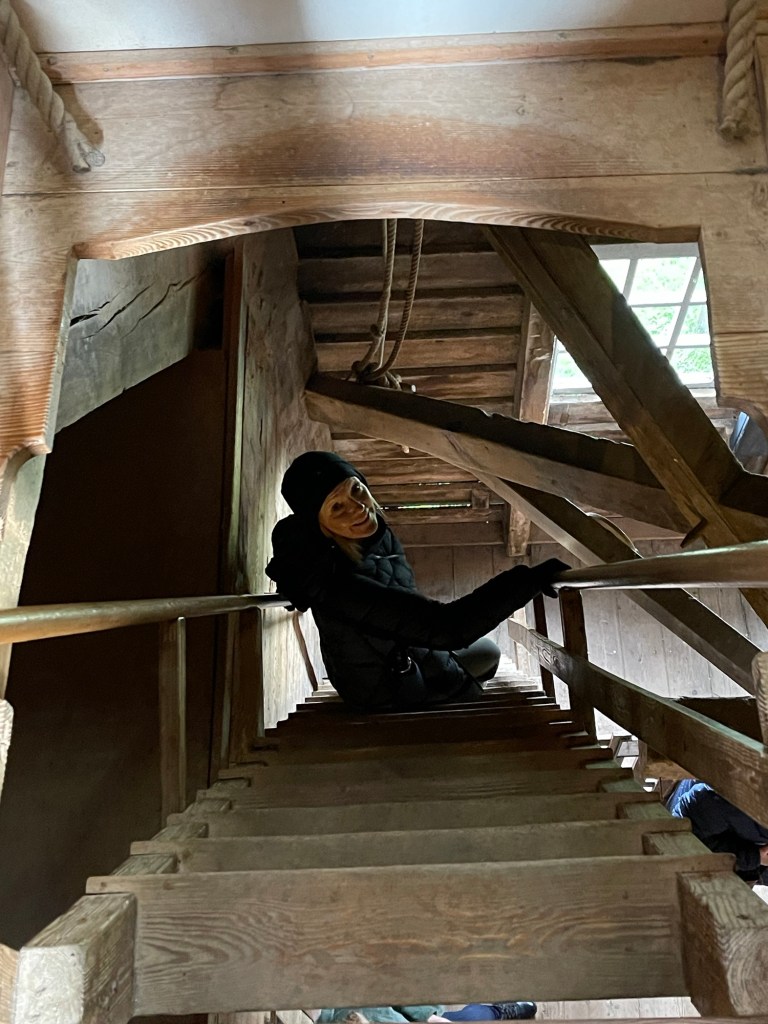
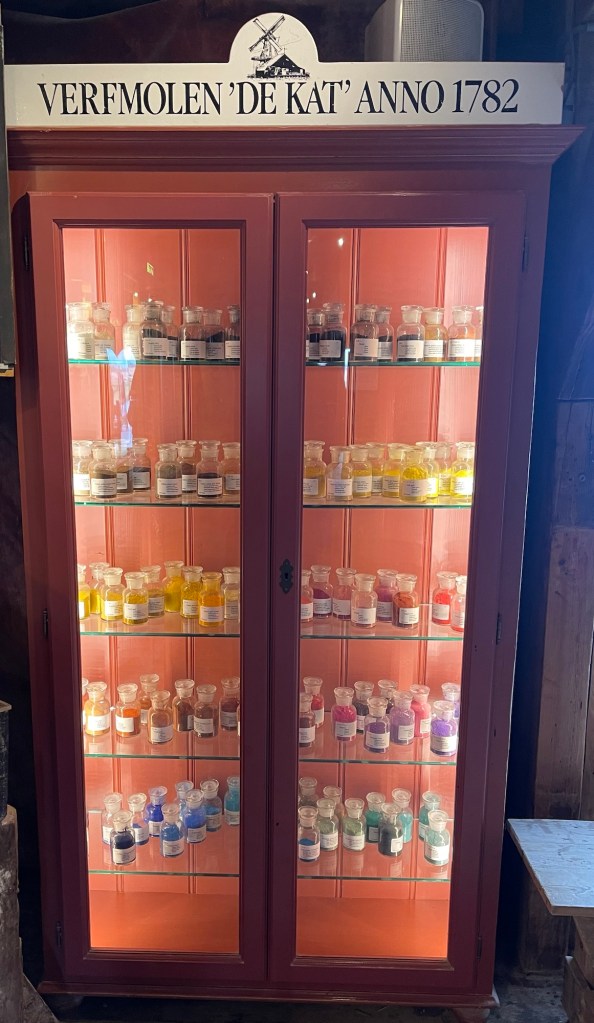
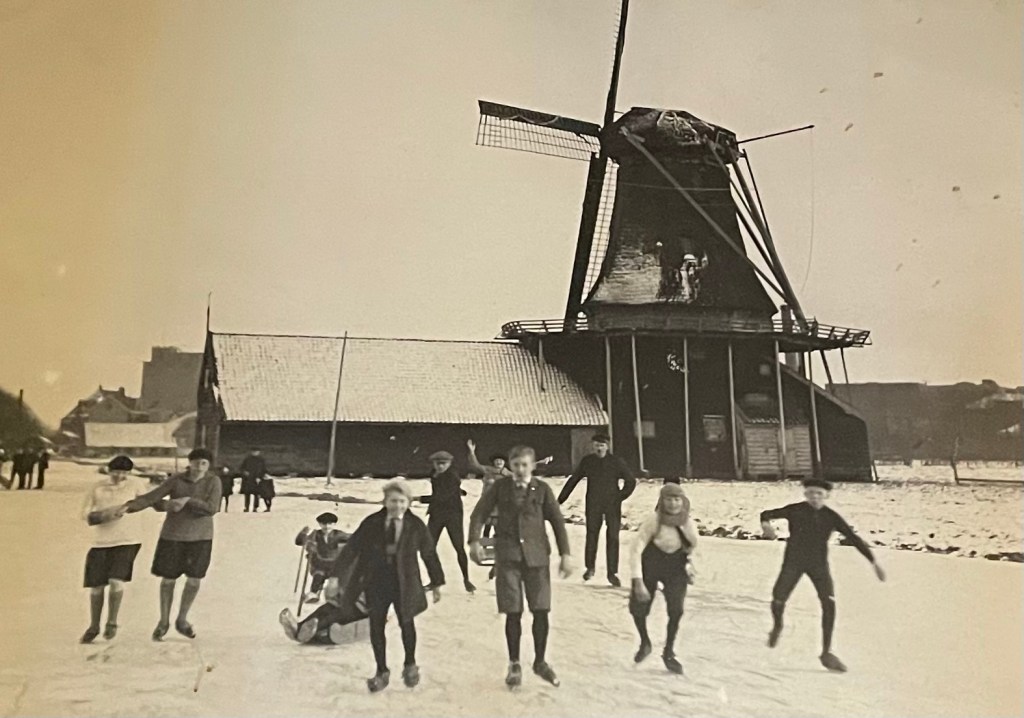
It’s only pigment and dyestuff which is produced here, the next windmill along apparently was where the linseed oil was produced. There was a cool photo on the wall which showed people skating on the river beside the windmill.
Once the wind gets above 65 miles per hour, the windmills are stopped. The speed is regulated by changing the amount of sails and blades cost $100,000 euros to replace. Another snippet or two from Gary. Thank you Gary.
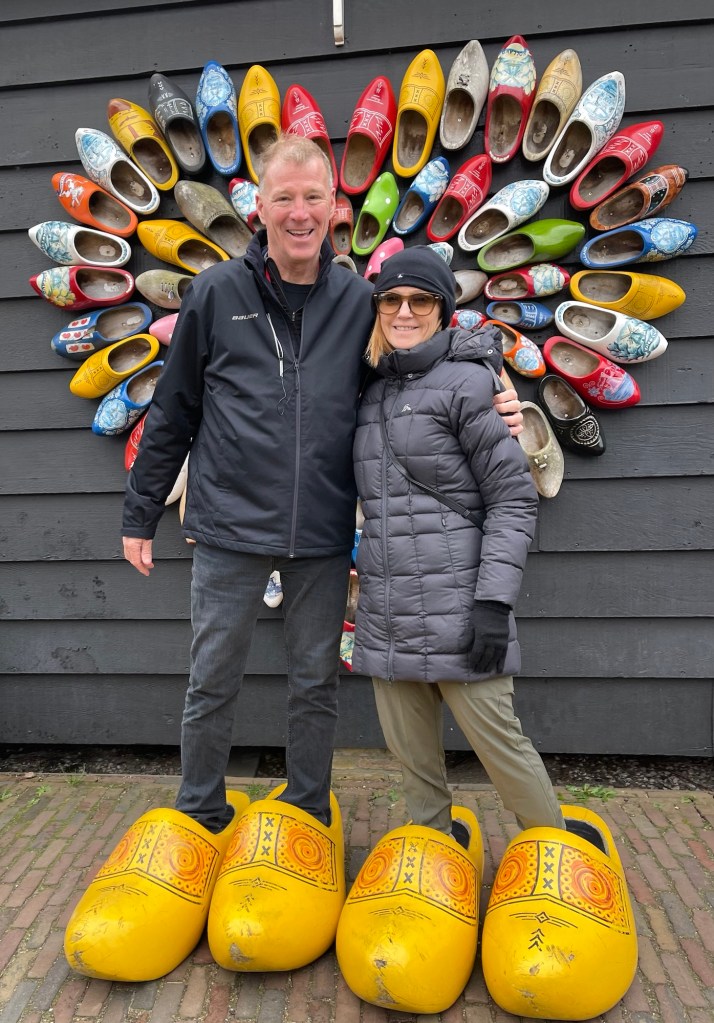
Cynthia took us on a walk around the village so we could look at the homes, where people do actually live. And of course we visited the clog making factory having the mandatory photos taken outside. May have been where I lost my drink bottle. 😢
The houses are below sea level and Cynthia got us to collectively jump on the path so we could see how solid the ground is not. The trees moved.
She said the average price of a home is $582,000 euros and there is a housing shortage in the Netherlands of about 92,000 houses. Young people place themselves on a list to rent social housing however there is a wait of about 13 years. They could build tiny homes but they aren’t allowed. Unless they are old. Then the younger people move into the parent’s home and build a tiny home, called a ‘Kangaroo house’ in the back yard where the parents live until their demise. Once they pass on, the kangaroo house has to be demolished.
Interesting.
The roofs are steep and thatched because a steeper roof means less need for replacement – only every 50 years. The thatched roofs contain about 15,000 spiders although apparently you never see them. A good reason why we wouldn’t be living there eh MoD?
The average farmhouse has 80-120 cows with no sheep to speak of and the subsequent pollution from these farms are stopping the building of new houses.
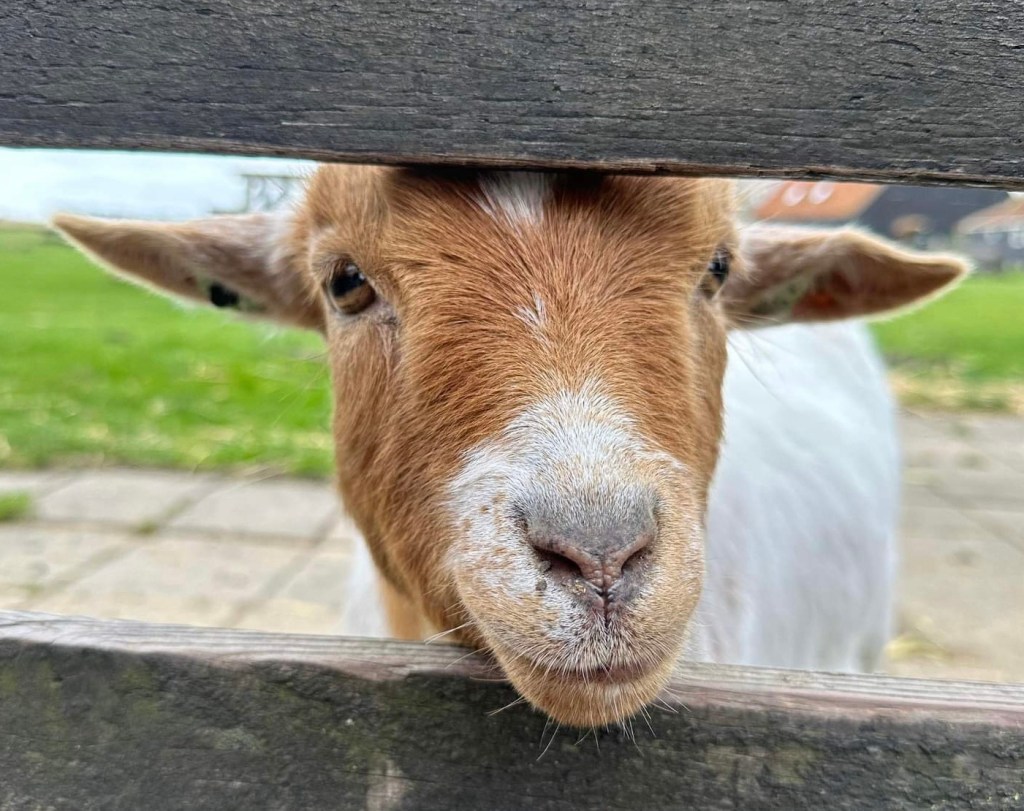
On our way back to our boat we saw an adult riding a bike with a helmet. First person (apart from a few young children) I had seen actually wearing any safety gear while riding.
Once we got back of course it was time for lunch. We were waiting at the barriers to the restaurant at 12.15. Of course.
Our Filipino Steward, Rob served us lunch, it’s a 3-4 course menu and as we started to eat, the boat started to move away.
Our table broke into a spontaneous version of ‘We are Sailing’ by Rod Steward.
To which Rob proclaimed he was Rob Steward.
Good one Rob.
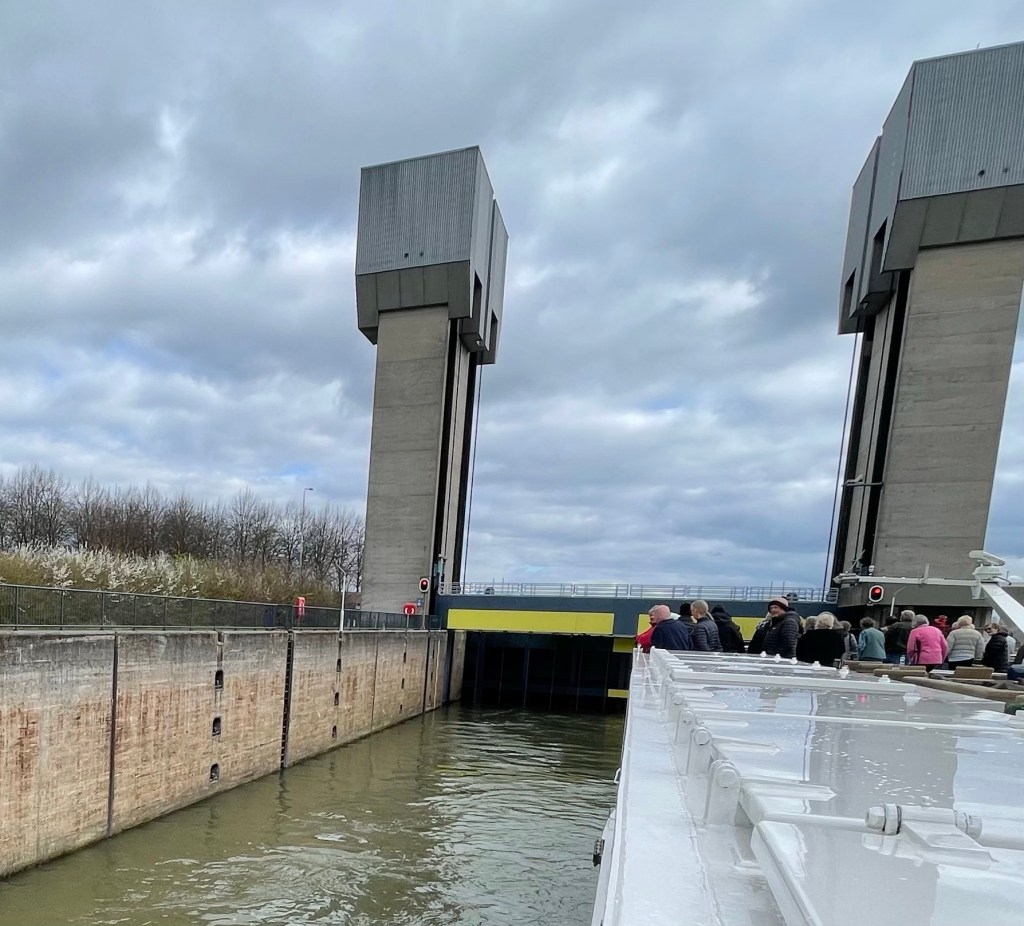
The afternoon was filled with watching the scenery and then our first lock. There are 68 to go through apparently.
It was absolutely fascinating and I am going to share the photos – have a look at the progression of the water line – the water had to rise to let us through.
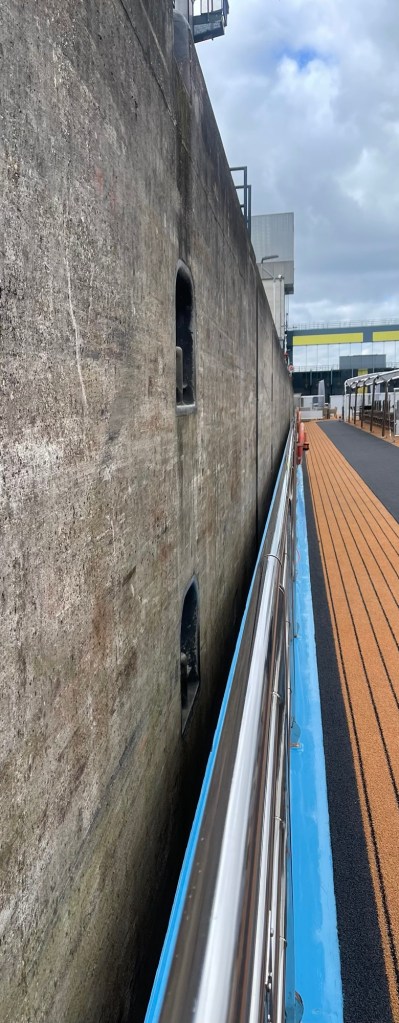
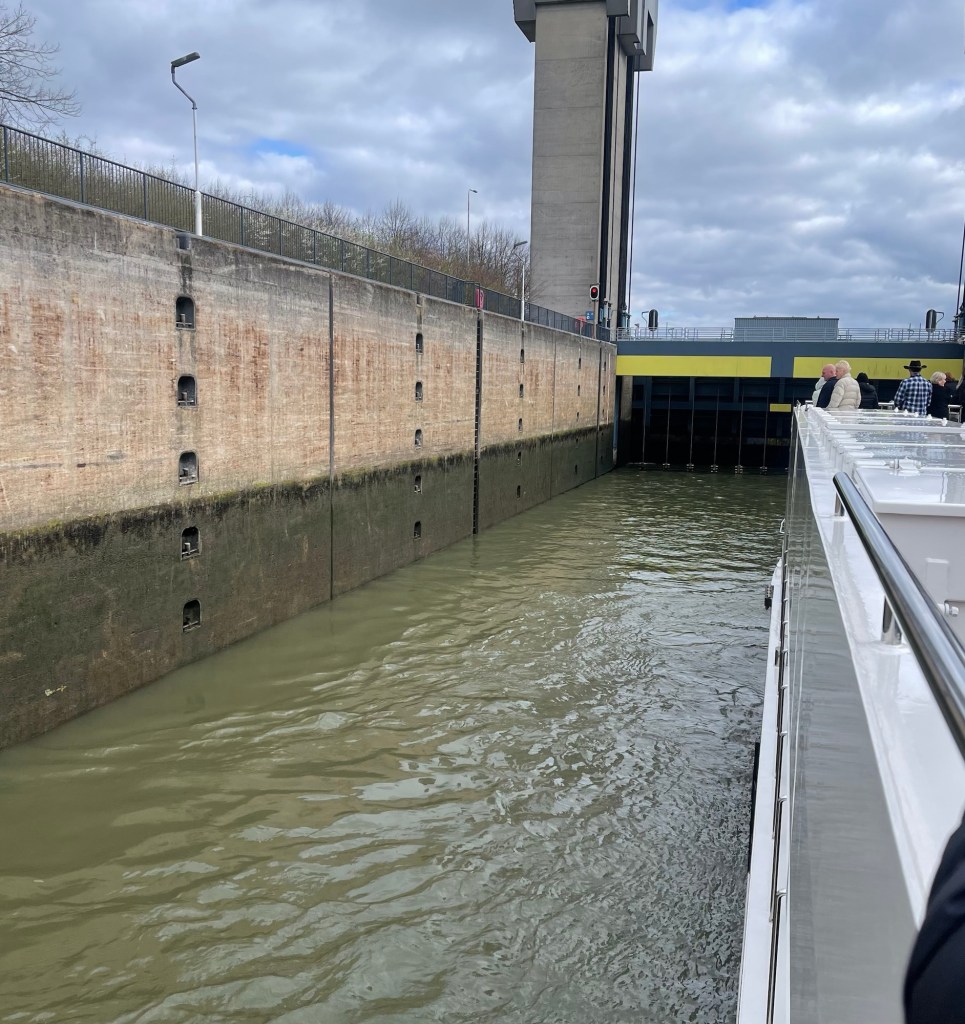

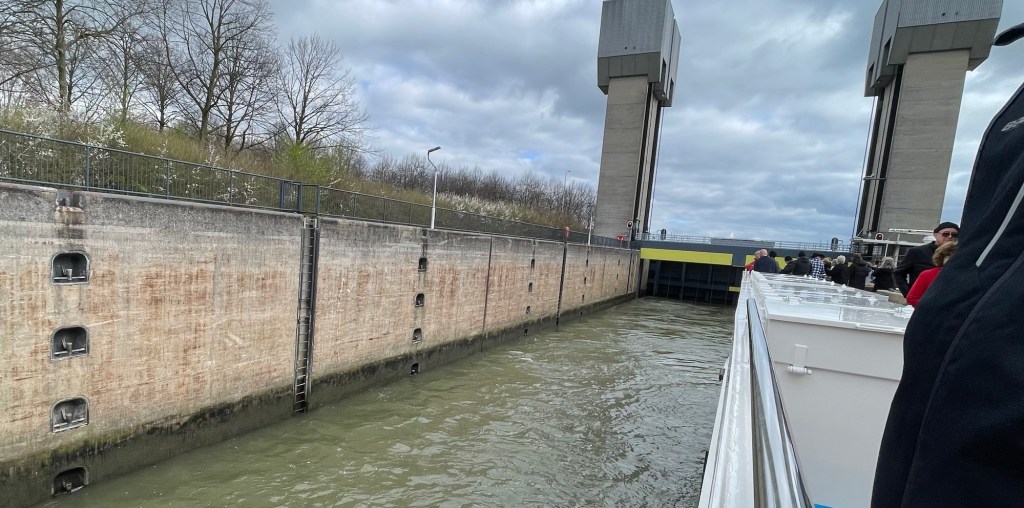
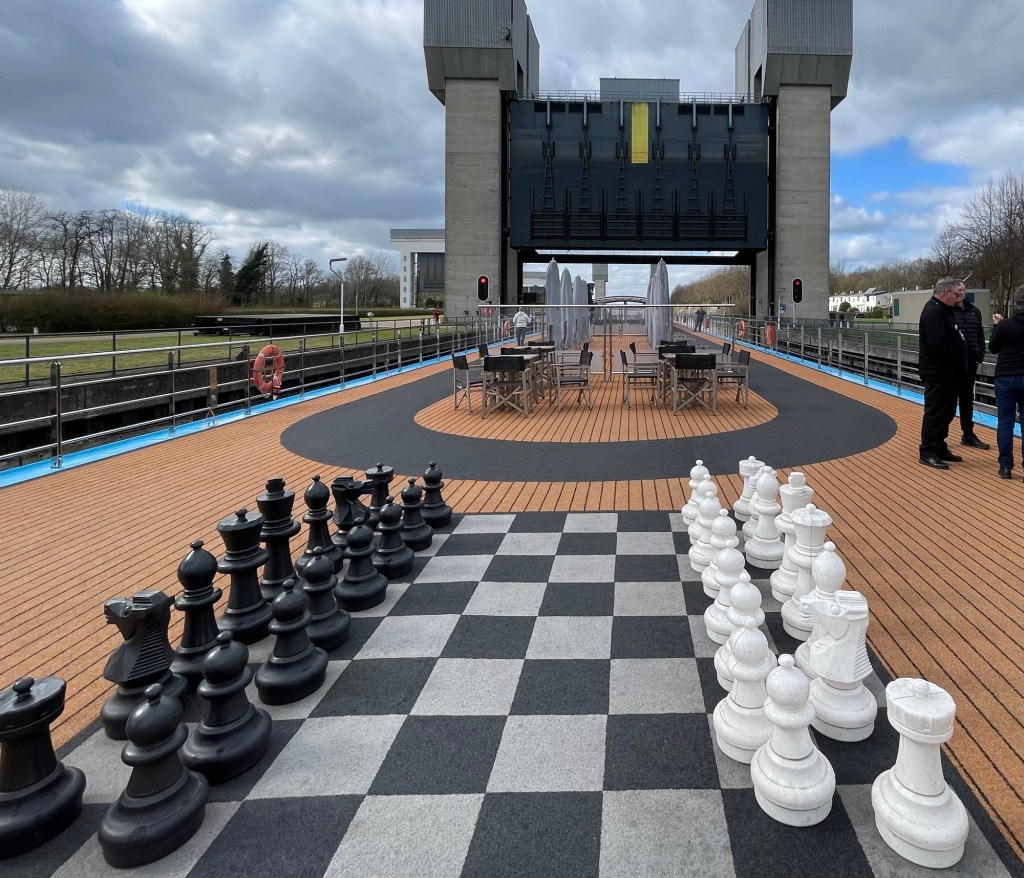
There is a lot to see and a lot of traffic on the canals including a whole boat full of John Deere’s……our grandson Finn will love that.

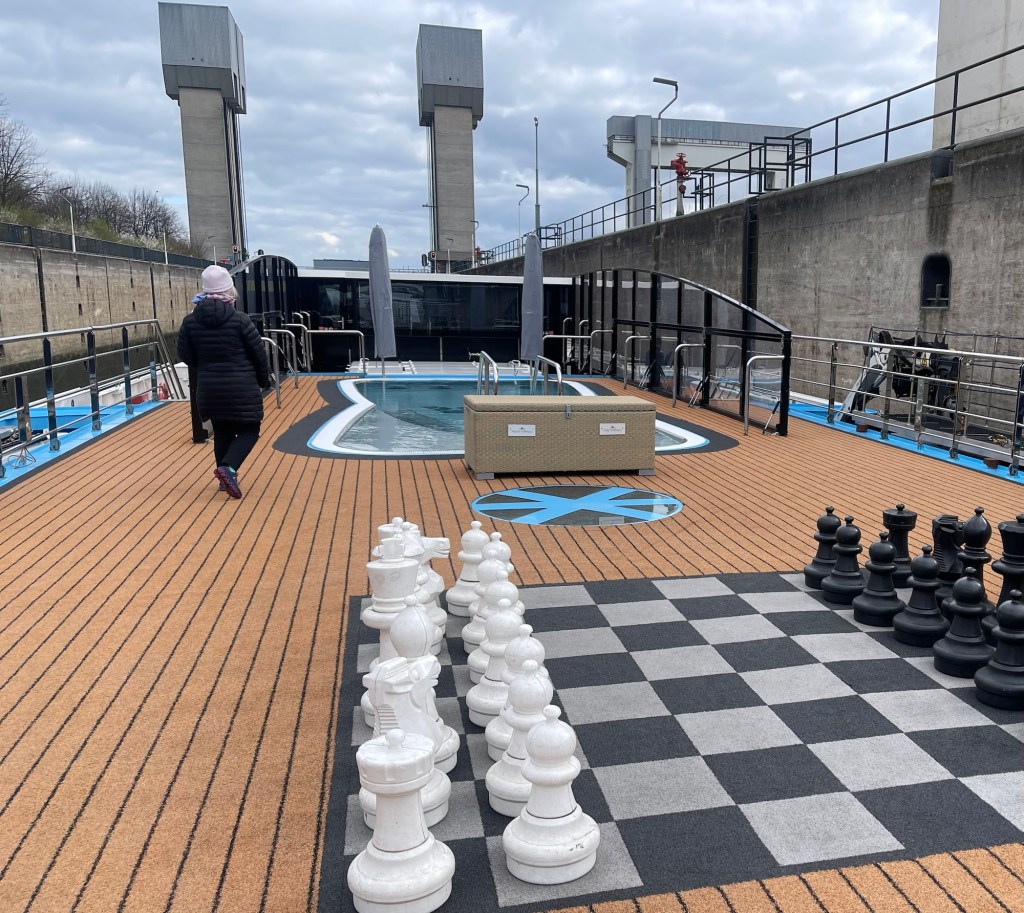
And this is the top deck of our vessel. The pool is warm but none of us are brave enough to try it.
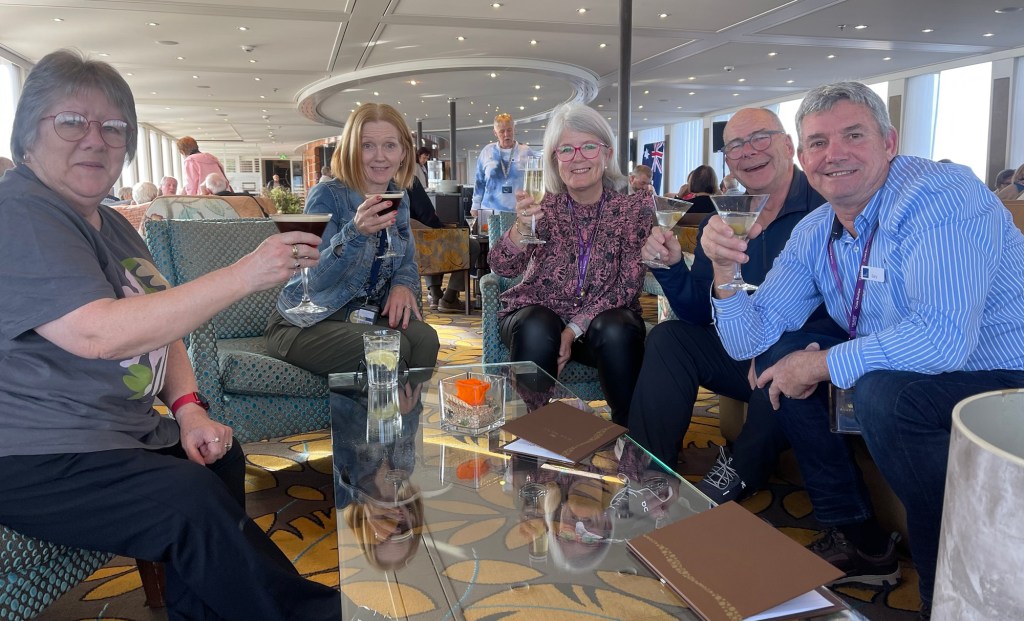
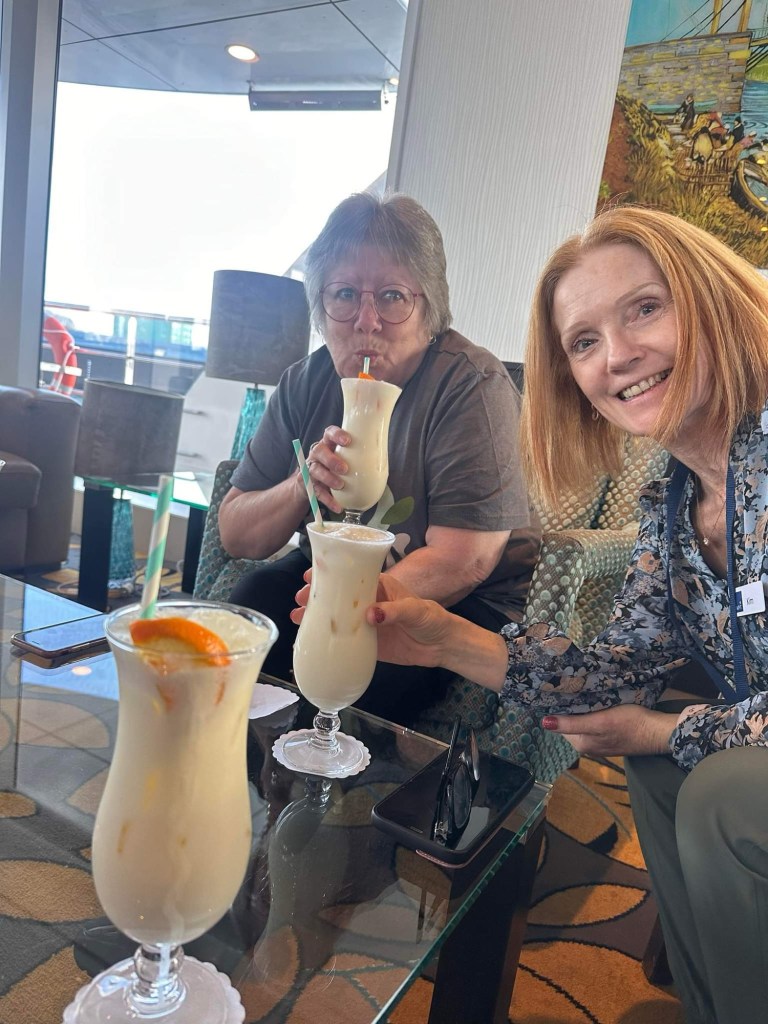
Being quite parched after our big morning, big lunch and watching the world go by, we adjourned to the lounge for a cocktail and then, unfortunately I discovered Pina Collada’s. Possibly not a good thing.
And then, after another meal, time to turn in for the evening.
Tomorrow we hit Germany.
 MaureenBetty